Travel Notes | Memory of the first Game Jam
In the past January, I went through a high-intensity test together with my partners in the university lab - the legendary Global Game Jam, which was not only my first game jam as a newcomer in game design, but also the first game jam of the whole lab. It was a historic moment and a memorable experience, which will become a new milestone for me and the beginning of the lab's progress towards social game creation activities.
Pre-game
Since I graduated, I've been looking for a competition that is moderately difficult and suitable for exercising my team's ability. It was not until December that I heard about Global Game Jam, and I was not the only one who had been waiting for this opportunity, but also the main programmer of our team, the former head of the game team in our lab. He was in the same year as me, and had always wanted to participate in a game jam, so he had plenty of time to participate in this event after the end of the exams, and our small team took shape. Since he was a social terrorist like me, we decided not to form a team on site, but to recruit from the junior members of the lab, and in the meantime train their teamwork skills. Eventually, after our "coercion", we managed to form a 6-member team with the following list of members (some of the members' names used nicknames according to their requests):
- Planner - Me
- Main programmer - Abaaba
- Programmer - ZnCu
- Programmer - Zu Zihou
- Art designer - Li Yue

The announcement of the theme for this GGJ was made on the 20th of January, and although this arrangement was counter-intuitive, it was a very good opportunity for the Chinese participants, as the start of the Chinese game was on the 26th of January, and we had 6 days to make advance arrangements, design the content, and even start the production in advance if anyone wanted to do so.
This year's theme was Make Me Laugh, which was a much more abstract topic than in previous years. Luckily, the theme was announced well in advance, or else it would have taken a team of novices like us half the time to discuss the theme. In the 6 days leading up to the game, we discussed a number of options and who the "Laugh" in the theme was supposed to make laugh. We vetoed two play styles, and one that centred on fighting clowns, and settled on a rapid reaction game that pitted employees against their bosses, set in an office setting.
Although the theme was announced long ago, the theme was still revealed before the start of the game at each of the game sites in China. So this year's theme is "Make Me Laugh", I thought it was "Make Me Laugh"!
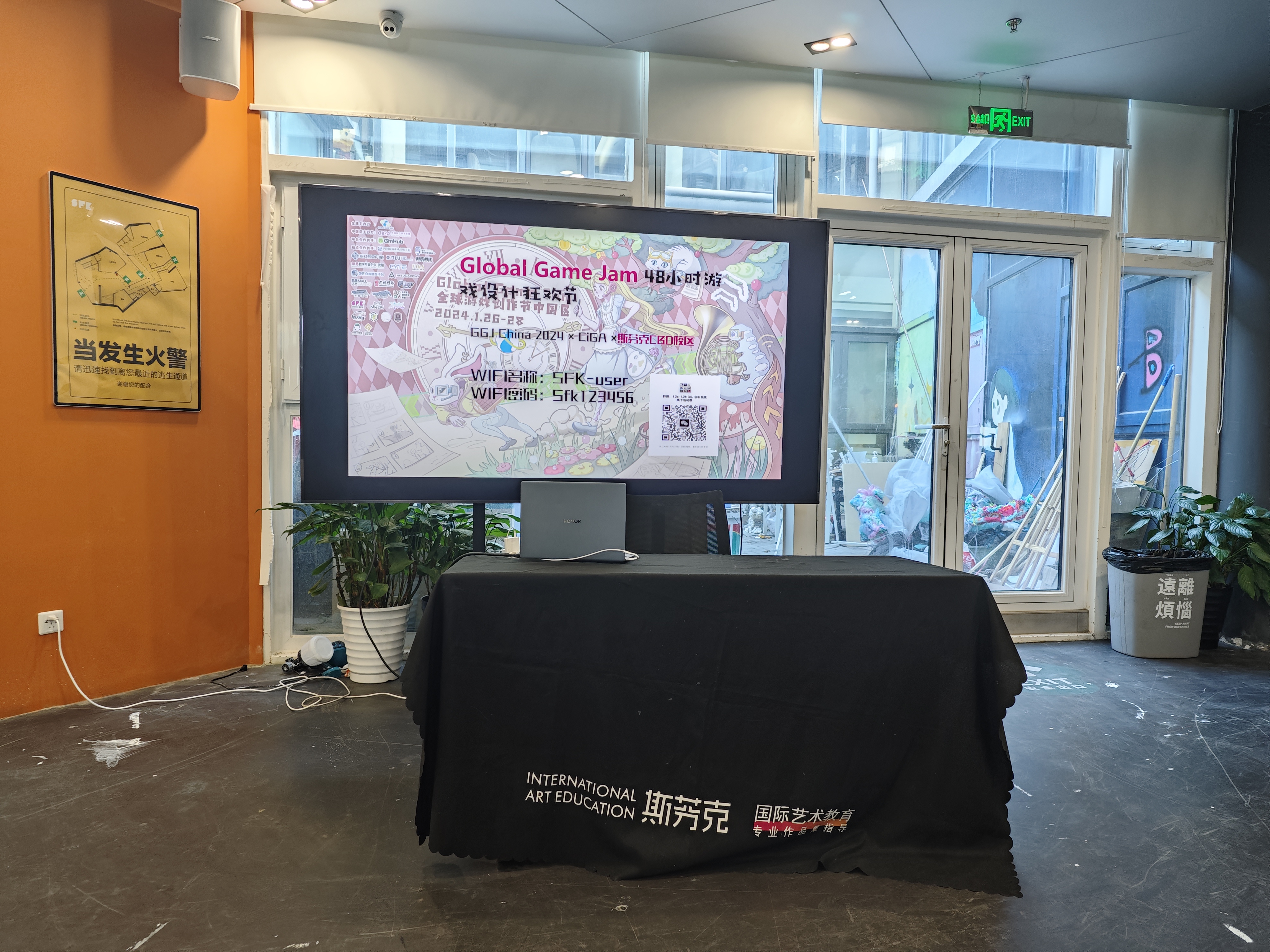
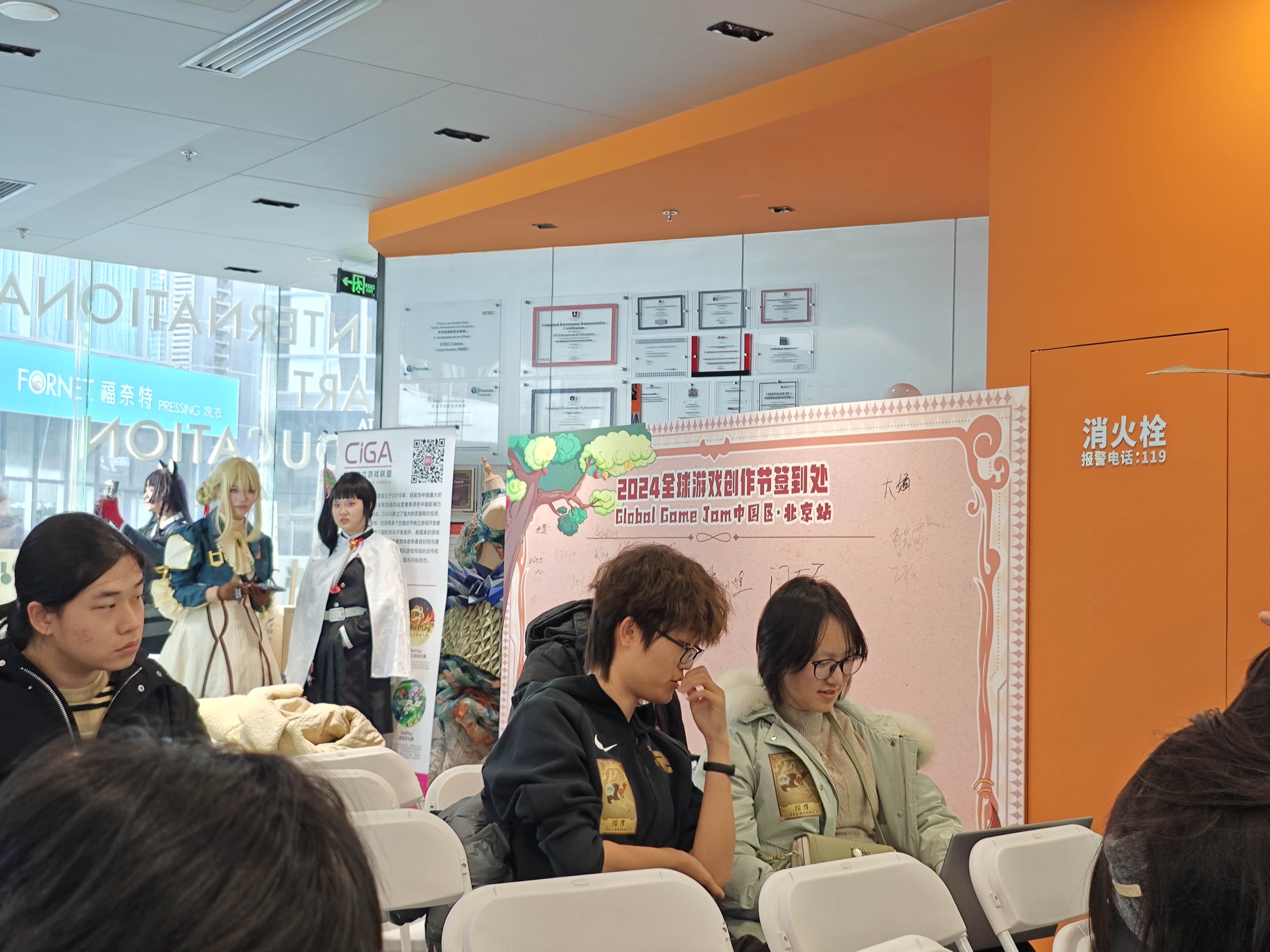
In addition to the theme reveal, each game site also organised a lot of different pre-game preparation sessions, like this site of ours had sessions such as contestants signing autographs, theme interpretation, game jam experience sharing, etc., and even organised a cosplayer welcome ceremony.
In-game
The game started at 6pm. After starting the game, I first determined the main framework and art style of the game according to the plan prepared in advance, while the main programmer assigned tasks to the other two programmers. The next step was for the main programmer to take the programmers and start messing around with some of the smaller features of the game, like the blood bars and such. The designers started to draw the game scenes according to my sketches, and I was responsible for supervising their results and answering questions to make sure the final presentation was in line with the design.
By 9pm we decided to stop work, partly because the game jam developer guide says to get a normal night's rest on the first night, and partly because neither of us had had a good night's rest the night before. I stayed up late to write the plan, and they were up late because of the overnight train ride. If we come up here and stay up all night the odds are we're going to die suddenly.
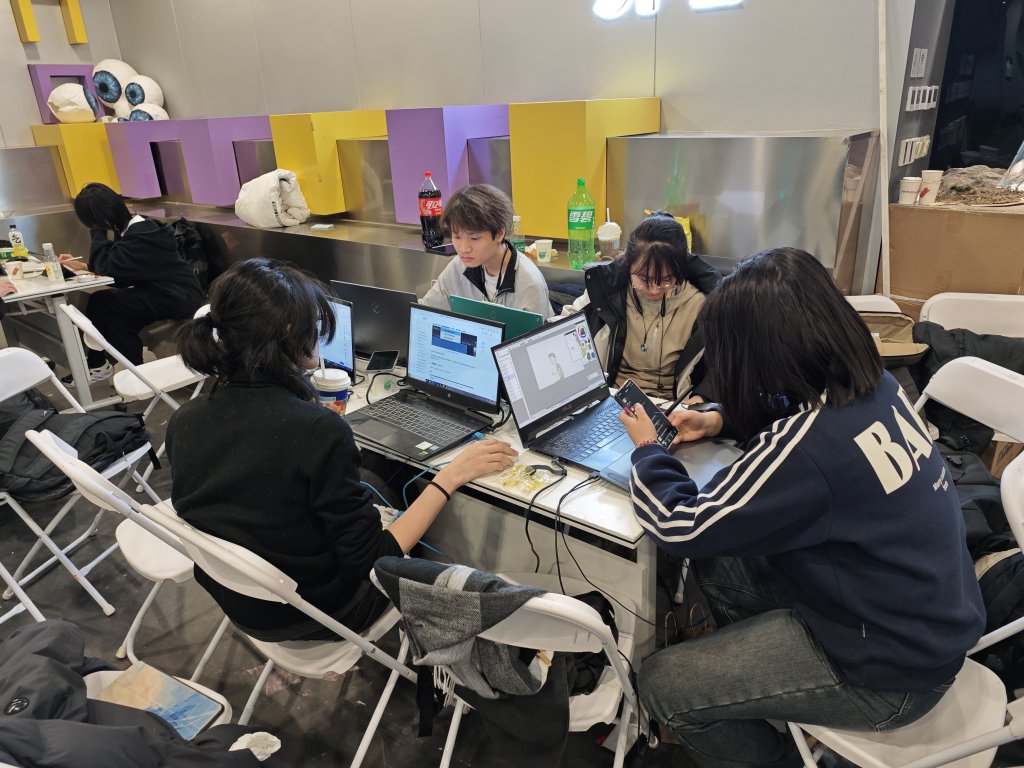
The next day we continued at the same pace as before. On the programming side, I didn't need to worry too much about the implementation of the features because I had the main programmer in charge, and I only needed to solve some problems with the interaction logic and the functional design. The artwork side is the most important, because we only have one designer, I need to ensure the quality and speed. So I basically let the designer skip the detail drawing, and try to discard the unimportant content under the premise of guaranteeing the rendering effect, so as to increase the speed. The rest of the time was spent buying snacks and meals for them.
Progress was pretty good throughout the day, the art part was pretty much done except for the UI, and the programming side was pretty much done after a late night. Plus, there weren't too many problems for me to solve later, so we decided to take a break. The designer and I went back to rest, and the programmer finished the rest of the content. After the morning, I came back to do functional testing and numerical design, the designer came back to draw the UI, and the three of the programmers went back to rest.
With less than 4 hours to go before the end of the game, the progammer fixed the issues that came up during testing, then added sound effects, and finally packed it out to test it all over again. The bug fixing part was very time consuming and in the end we basically stepped over the dead line to finish the game.
Post-game
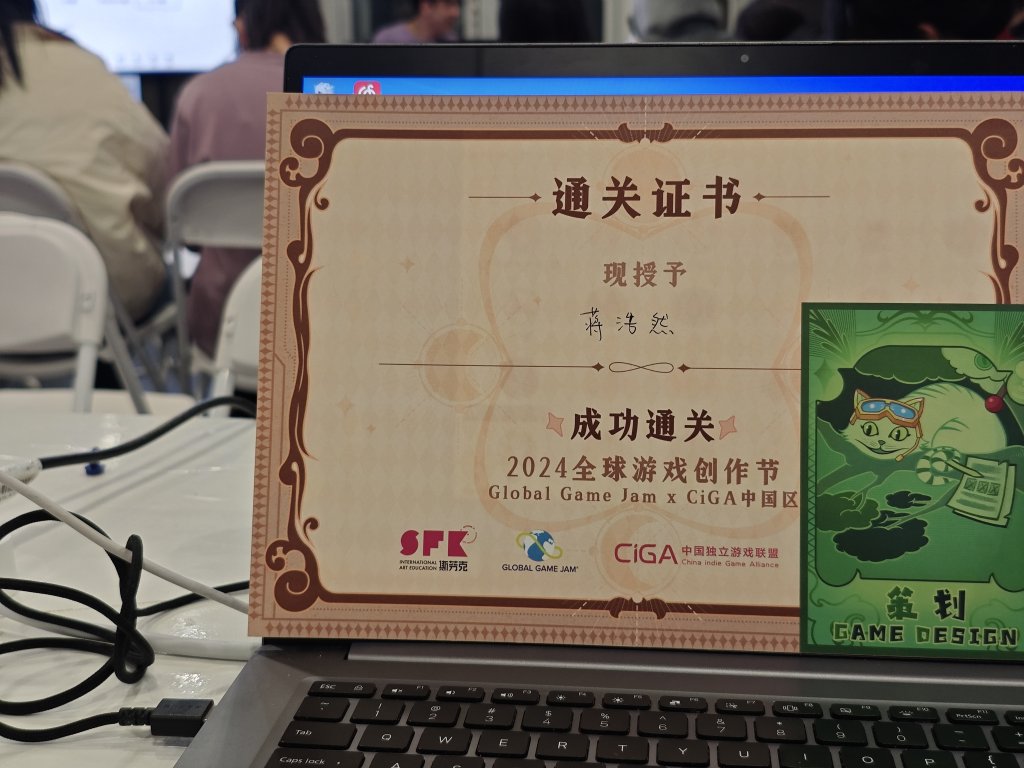
After the game, I stayed behind for the results presentation while the others took the opportunity to go back and catch up on their sleep. After the results presentation, I talked to the judges at the game site, and the 48 hour limit was really not easy for a new team like ours. The lack of designers in our team led to a lack of feedback in the game. Players could not feel the connection between their actions and the endings in our game, nor could they feel the strong feeling of "laughter" that each ending brings.
Although there were quite a few problems with this collaboration, it was an uncomplicated experience for the junior students in the lab and a valuable one. It is also hoped that they can lead more students from the lab to participate in such activities in the future to improve their game design and development skills.
Detailed description of the game for this production: