Travel Notes | 2023 Shanghai Tour #4 When I first attended the China Game Developers Conference
In the previous chapter, we finished talking about ChinaJoy's commercial area, and in this chapter we'll talk about the China Game Developers Conference.
As we said before, CGDC is part of the China Digital Entertainment Congress. In the whole CDEC, only CGDC is a conference related to game development, while the other conferences are for leaders and decision makers in the game industry. CGDC is divided into a number of sessions, each with a different theme, such as Role Playing Games session, Strategy Games session, and Action & Adventure Games session for discussing the gameplay design of different types of games, Technology session and AI session for discussing the game development technology, Indie Games session for independent game producers, and Globalised Operations session for game operations.
As an initial learner of game design and game development, most of the content is too esoteric to be covered in day-to-day development, so the only option available is the Indie Game Session. This is a session where indie game developers talk about the problems they may encounter in game development and how to deal with them, and most of the audience are also indie game developers. In a way, I am also an indie game developer, but you need to know that indie game development is also divided into team development and individual development, I am an individual developer, and most of the speakers in this session shared their experiences in team development, which may help me a little, but not much.
It's not useful for me, but it's helpful for some others, like the student lab I joined when I was in college. So I'll also be sharing some of the important lessons learnt during the conference in tandem with the students in my lab, hopefully helping to improve their teamwork skills.
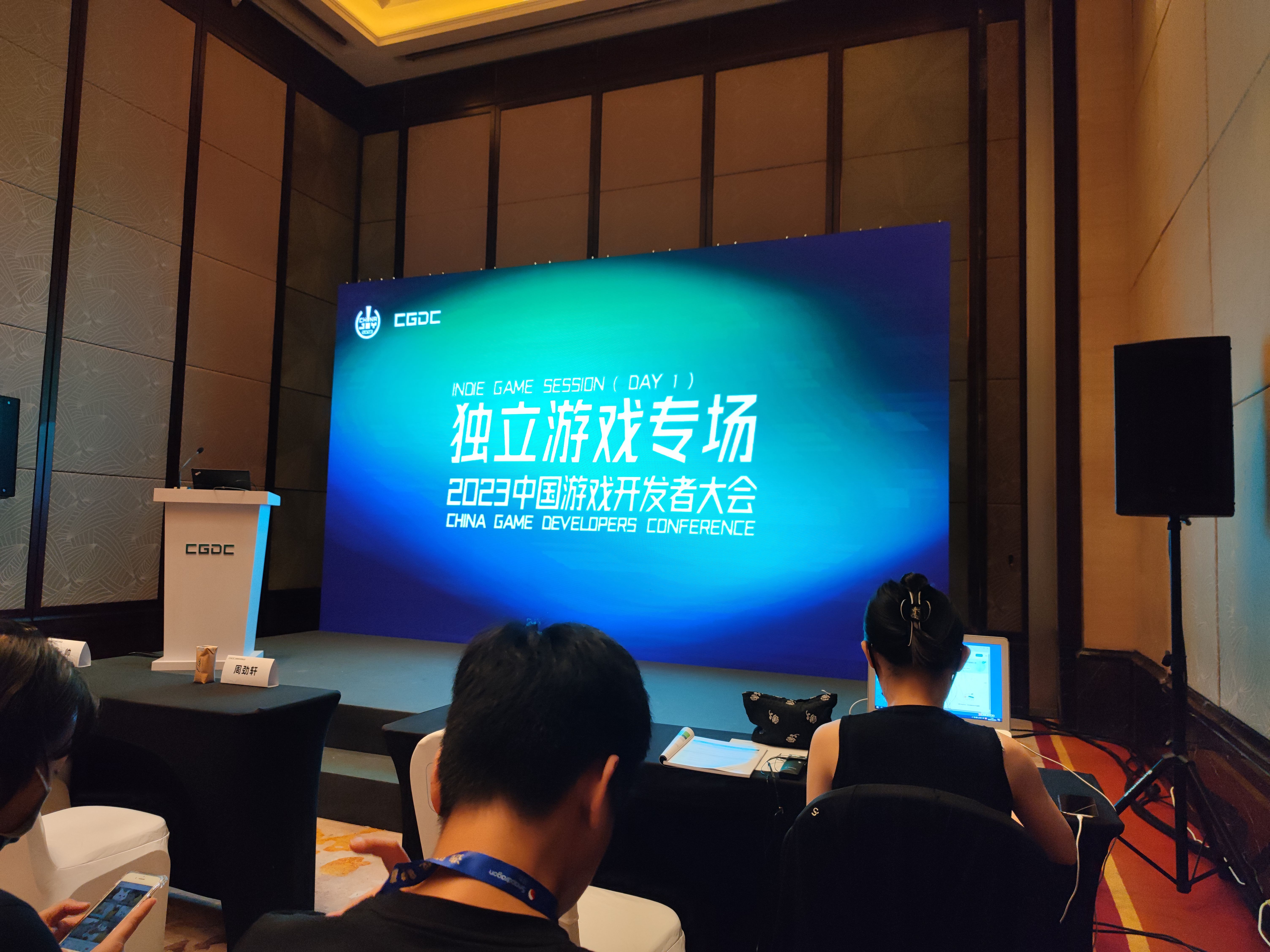
The first session of CGDC was in the Role Playing Game session, which was a sharing of game localisation experiences by Mikołaj Szwed, Localisation Director at CD Project Red, with the other sessions starting just after this one.
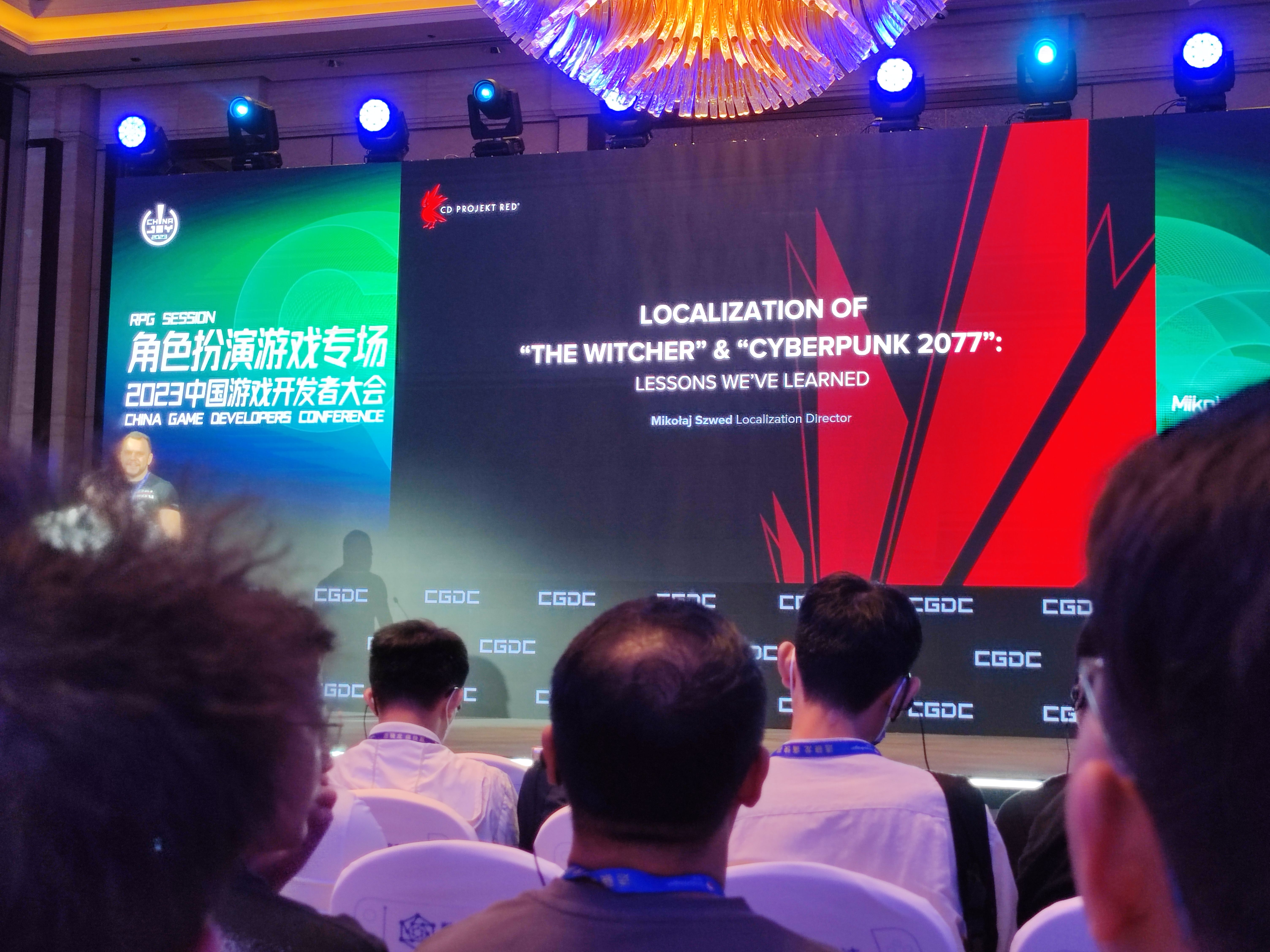
The first guest speaker of the Indie Game Session was Mr Li Bin, a producer from RocketPunch Games, who shared how an indie game development team can make a feasible development plan and how developers can revise and update the development plan when the plan changes or when there are problems in the development process.
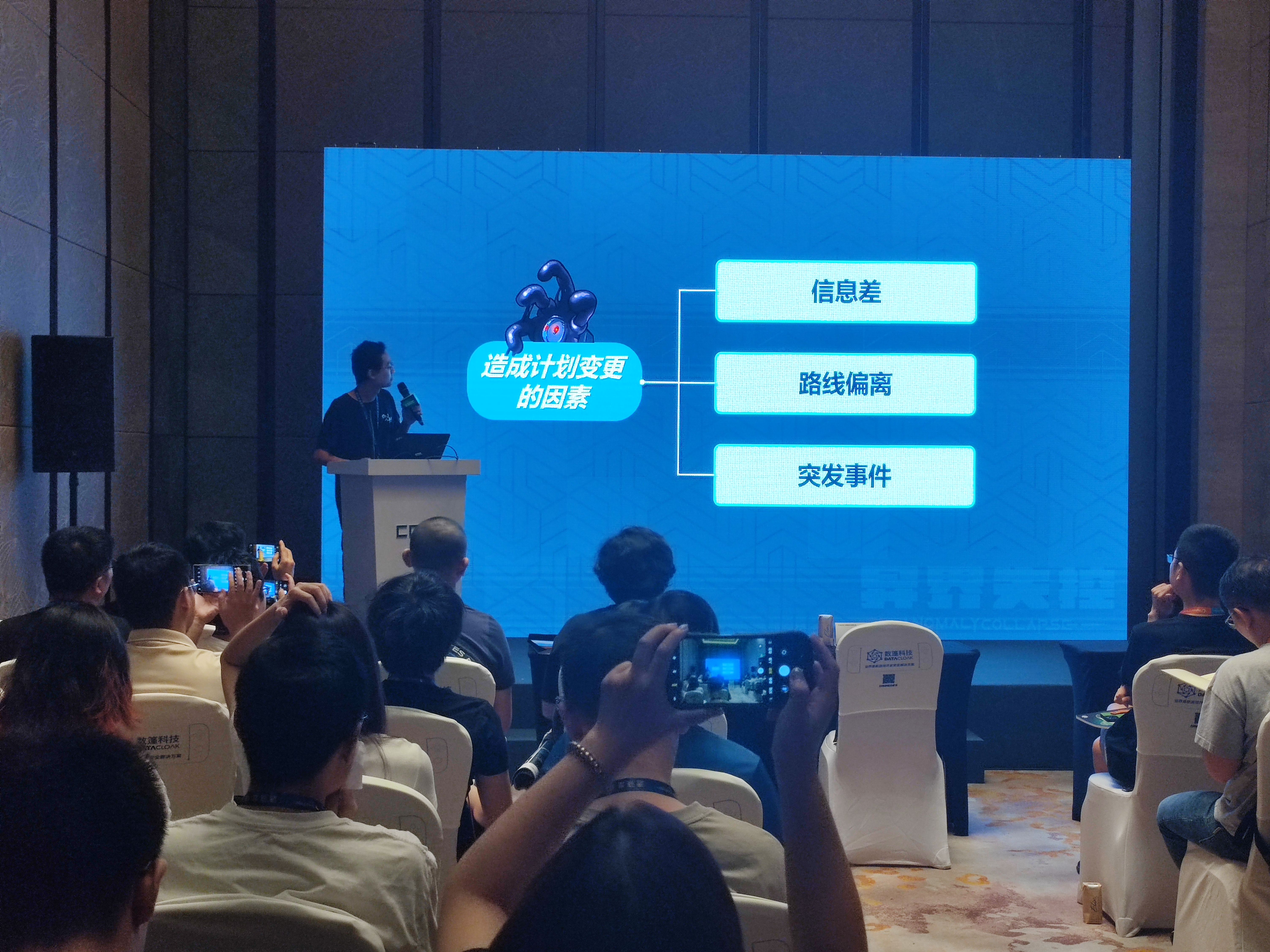
The second speaker was Mr Jiang Zebiao, a producer from Shenzhen Element Software, who shared the difficulties their team encountered in making the 4X game and their solutions. Especially the design problems of game rhythm and personnel problems encountered in the development.
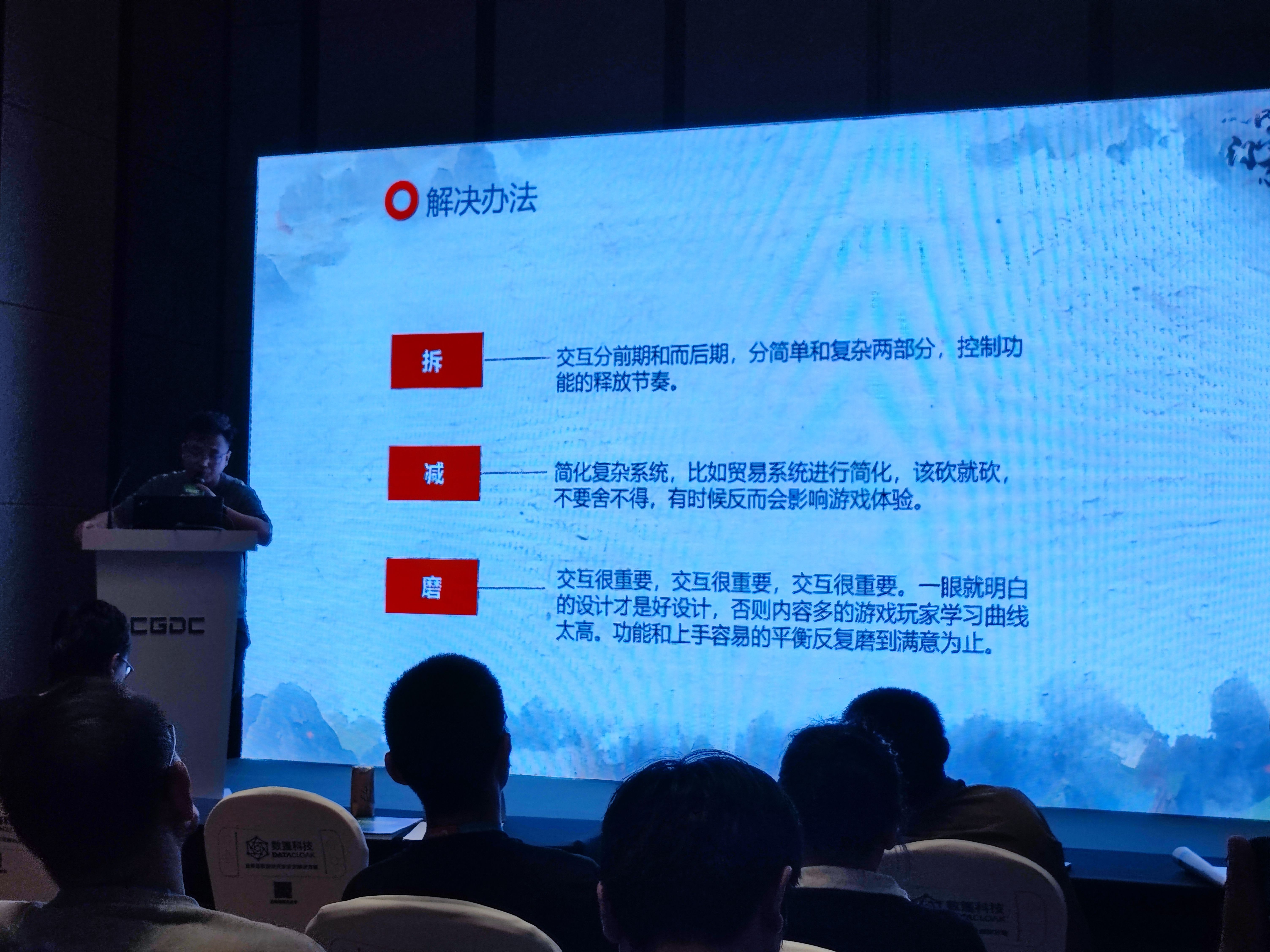
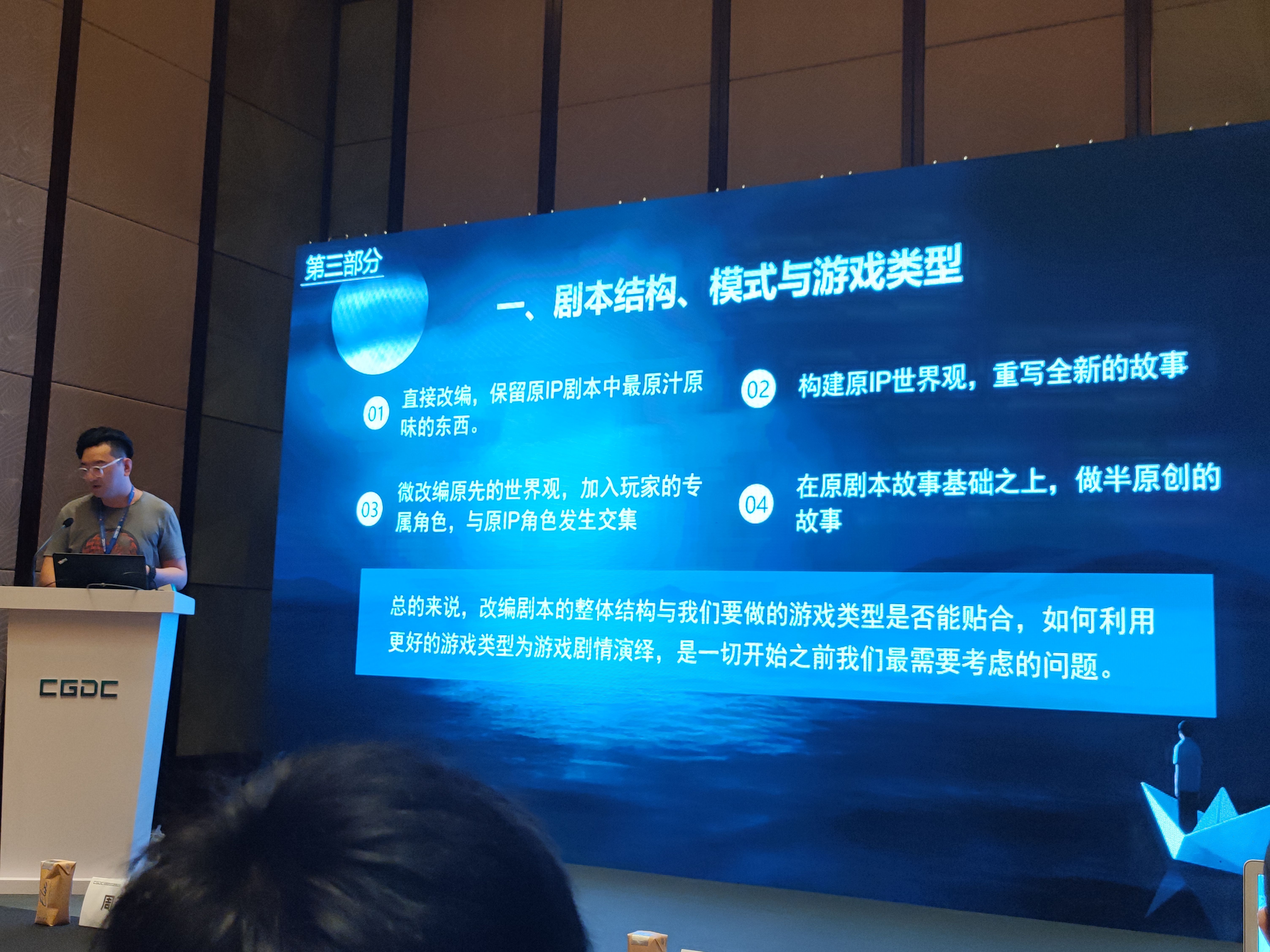
The third is Mr Qin Shuai, the master planner from Aluba Studio, who shared some of his experience in making film and TV adaptation games. This type of game is more rare but very important for the adaptation of the plot.
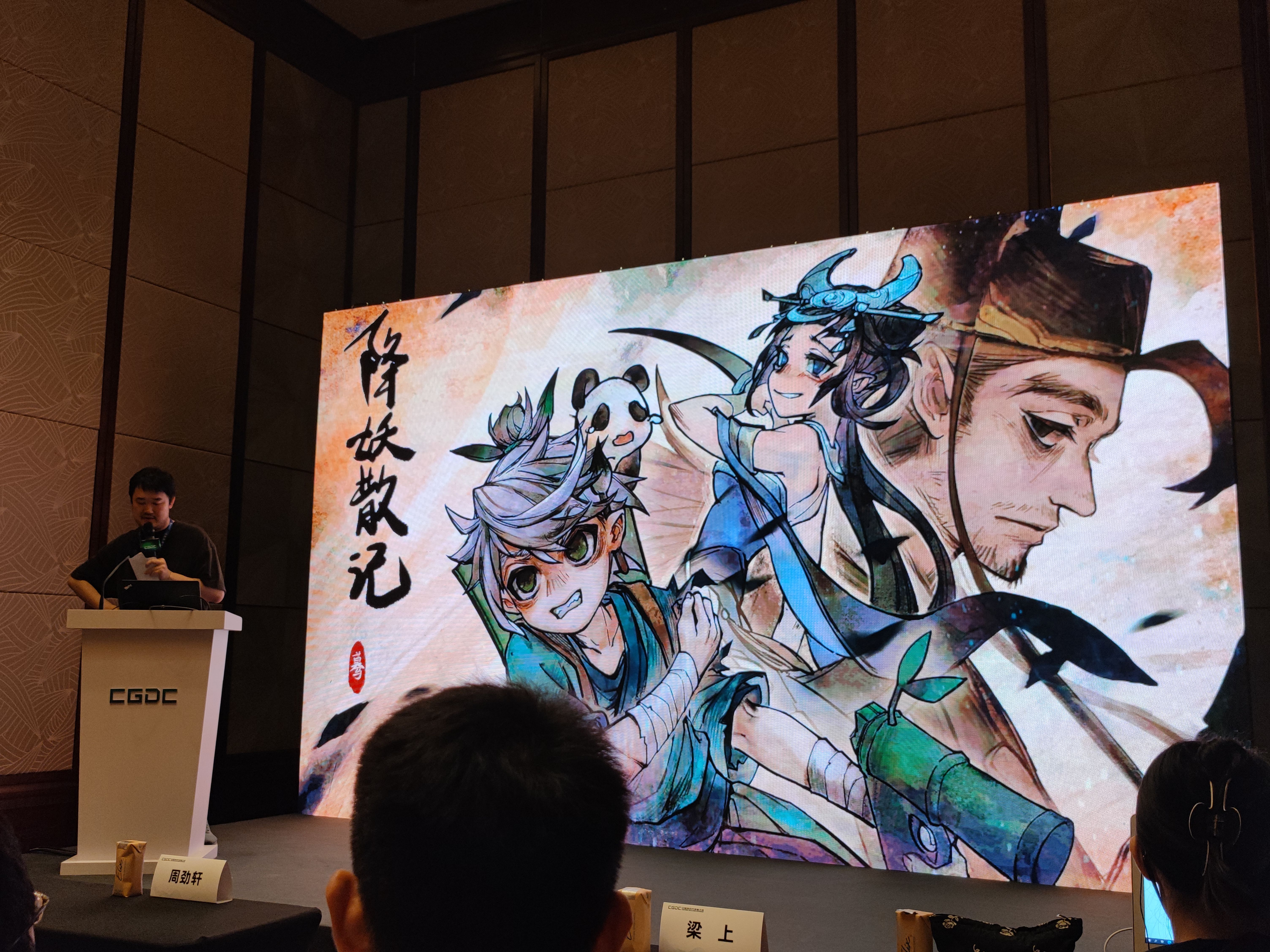
The fourth speaker was Mr Zhou Jinxuan, a producer from MòGames, who shared how their team designed Chinese characters and Chinese game modes, as well as the problems their team encountered during development and his thoughts.
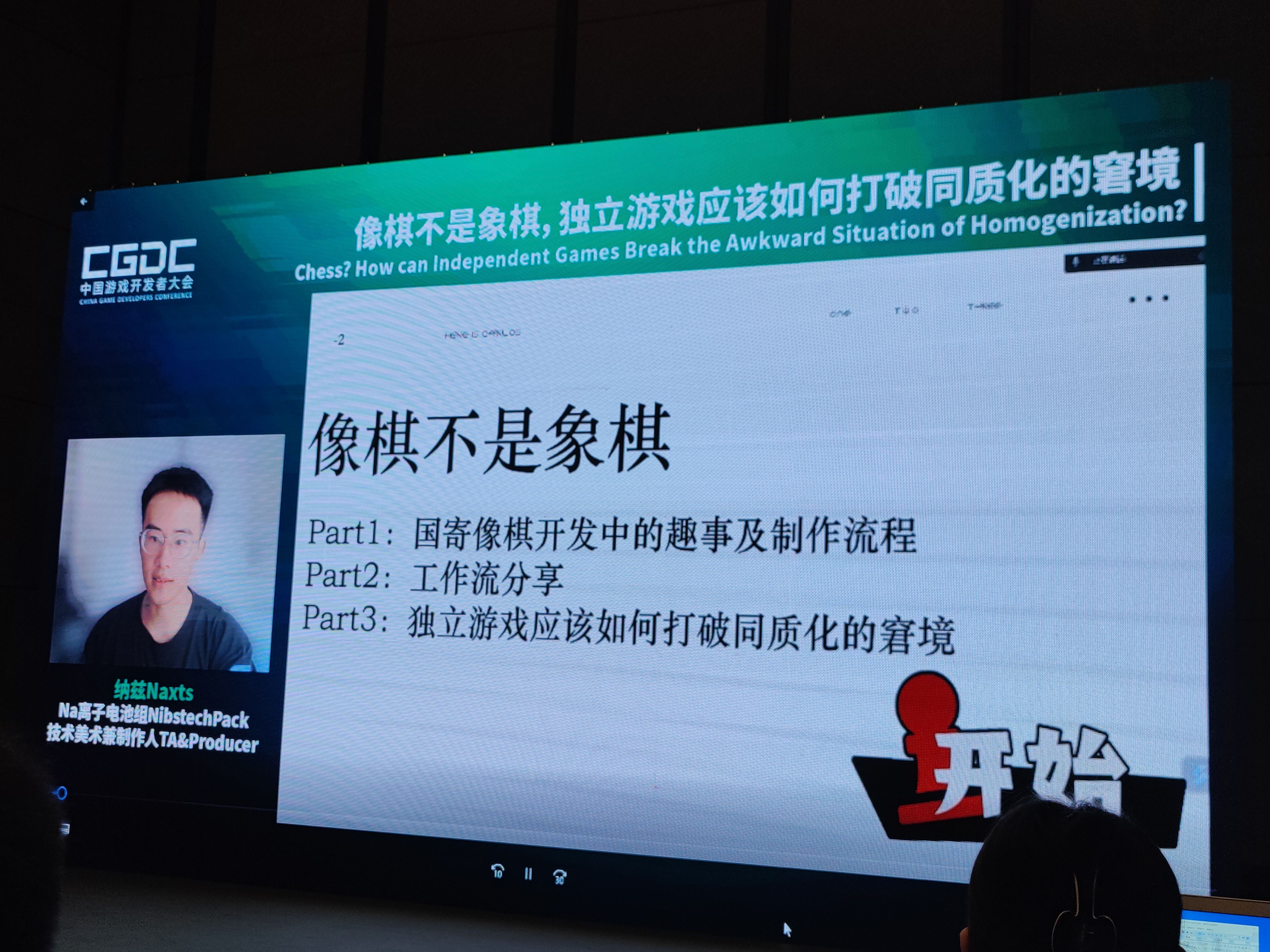
The fifth is Mr Naxts, a producer from NibstechPack, who talked about their team's experience in participating in Game Jam and how they designed a novel game in the competition. He also shared how their team worked as a small team to communicate as a team and design a development plan.
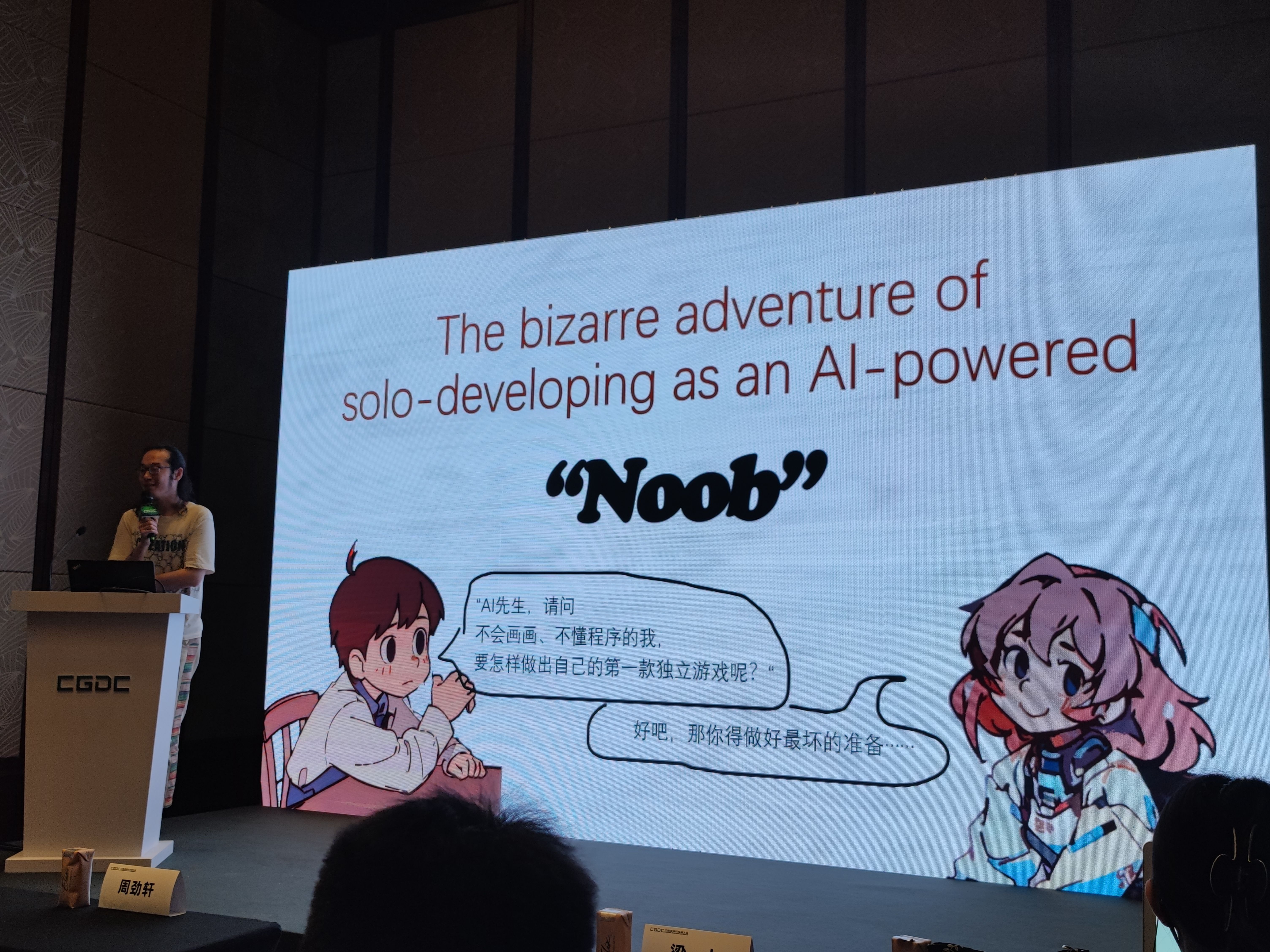
The sixth speaker was Mr Liang Shang, an independent producer, who shared how he uses various methods to create art resources when making games, and also introduced how a white producer with no basic knowledge can make use of the power of AI to complete the production of a game. He also shared why he chose to become a solo developer and his original intention of making games.
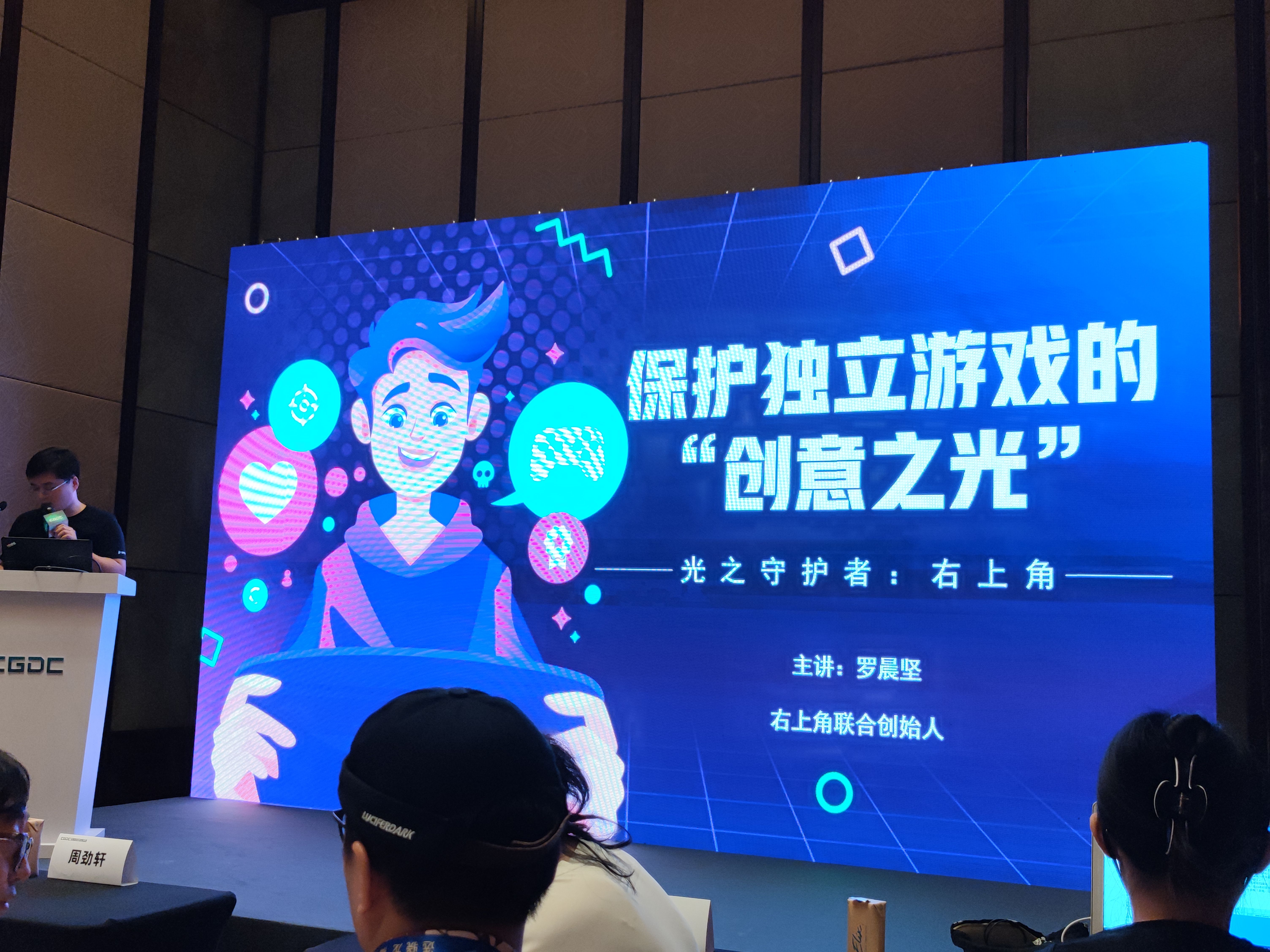
The last one is Mr Luo Chenjian, the VGM from SHANGHAI Youyun. This company is not a company that develops games, but a company that protects games. The Youshangjiao platform they have established is the first platform in mainland China that focuses on protecting the copyright of independent games. They provide infringement detection and legal services to independent game development teams and individuals free of charge, defending the rights and interests of most independent game developers.
The above is not much of an introduction, for a more specific introduction you can watch the video below (in Chinese only):